Poly-Vinyl Pests is a top down shooter where two players play as ants, alternating between cooperative boss fights and competitive arenas to become Queen of the Anthill.
It was developed from September 2024 to May 2025 with a team of 9-15 people in Unity 5. I worked on the project from the conception phase to first release. While I made contributions to multiple areas of the game, my role evolved over the course of development to primarily work on the user interface and user experience.
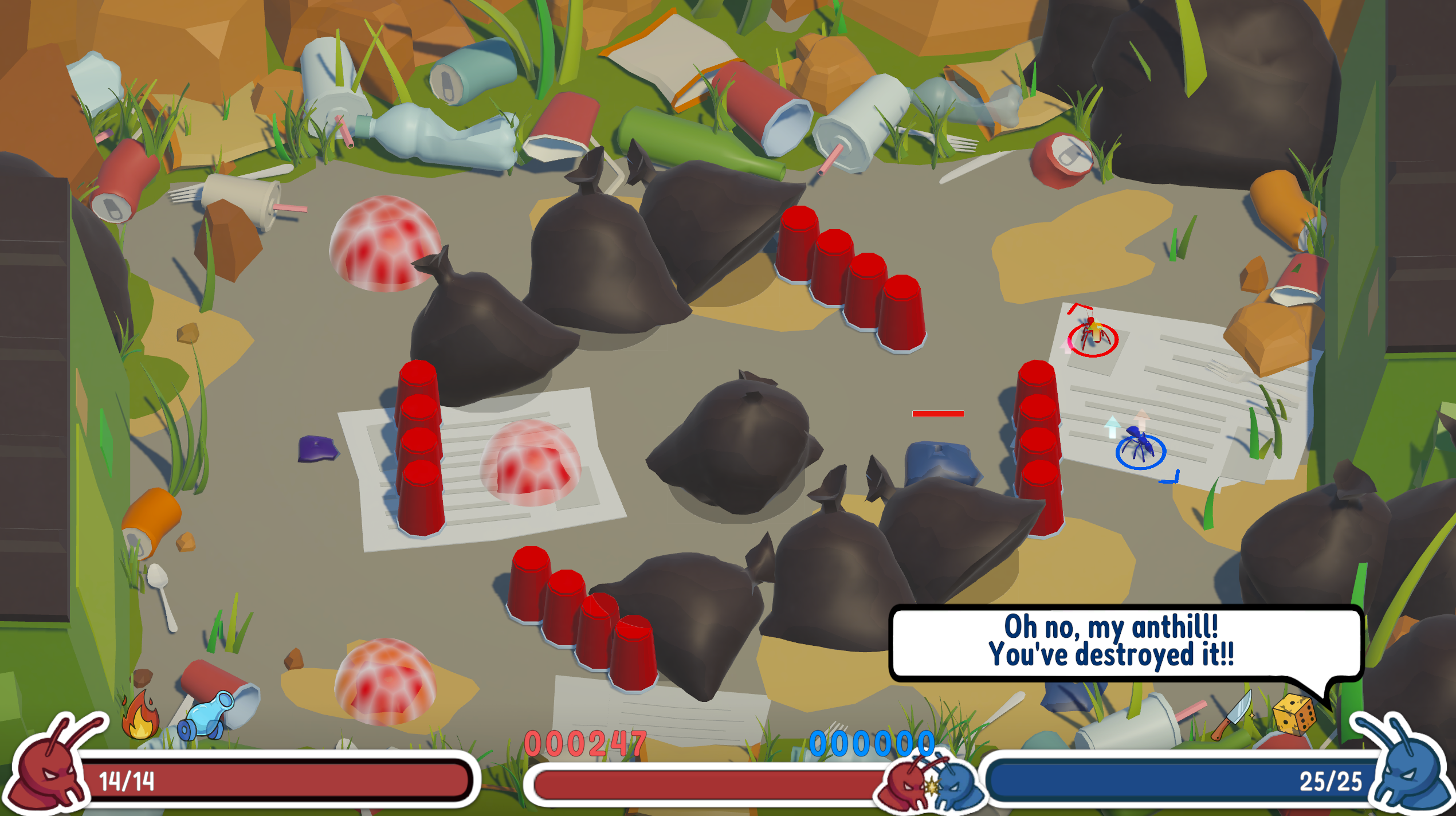
Gameplay of PVP! during a co-op section.
UI Concepting
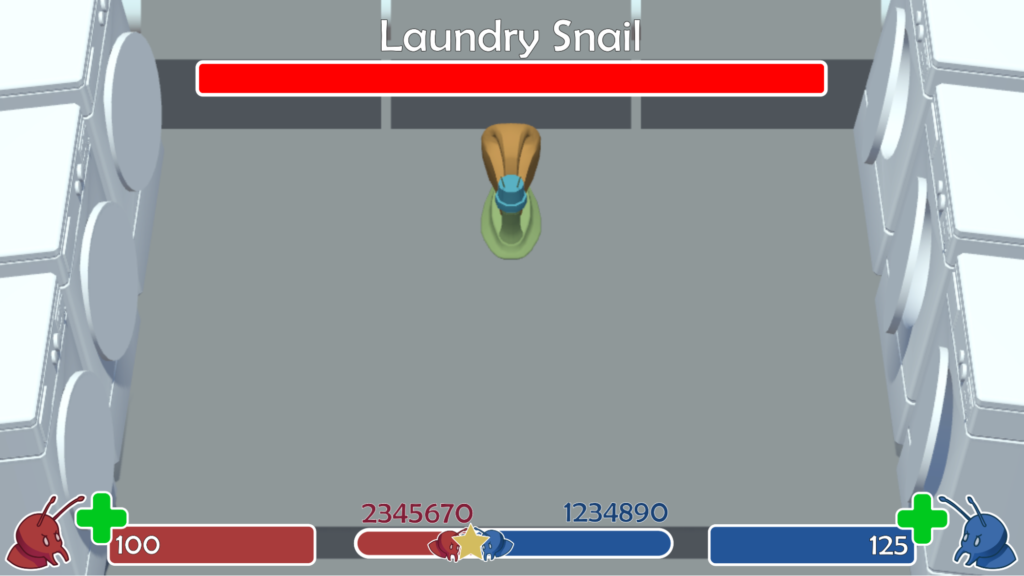
The team wanted to create a cohesive artistic vision of the game early on, and we got together to discuss on how to create the visual style we wanted. Some key aspects of the game that we had already decided on before moving to the UI include the fantastical setting of the game, the arcadey gameplay, and the colorful palette of the mutated bug characters. I took inspiration from a variety of multiplayer games that would be found in arcades, such as fighting games, multiplayer light gun shooters, and coop games. This created a UI where the two players can see key aspects such as each other’s health, score, and boss health during gameplay.
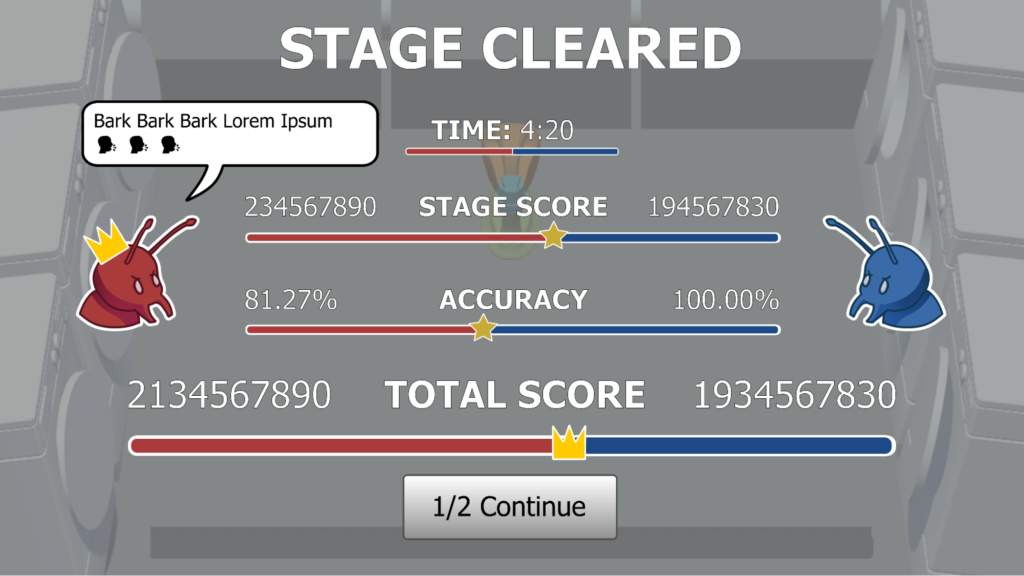
Here is an example of the end screen results. I wanted to continue to give the game an arcadey feeling, so I took inspiration from other arcade games to display the score, such as cooperative shooter games like Time Crisis. To keep the screen spaced out well, and to improve the competitive spirit of the game, I made the decision for the game to display some non-essential statistics to the game, such as accuracy and player barks.
To be honest, I am not an artist, but just a regular game designer. As you can see between the first conception to final product, it took many iterations and collaboration with the other artists on my team to refine the UI elements and create the art assets that would fit with the game well. I would like to give many thanks to Jasmine Leong for creating the final assets that would show up on screen.
Player Controls
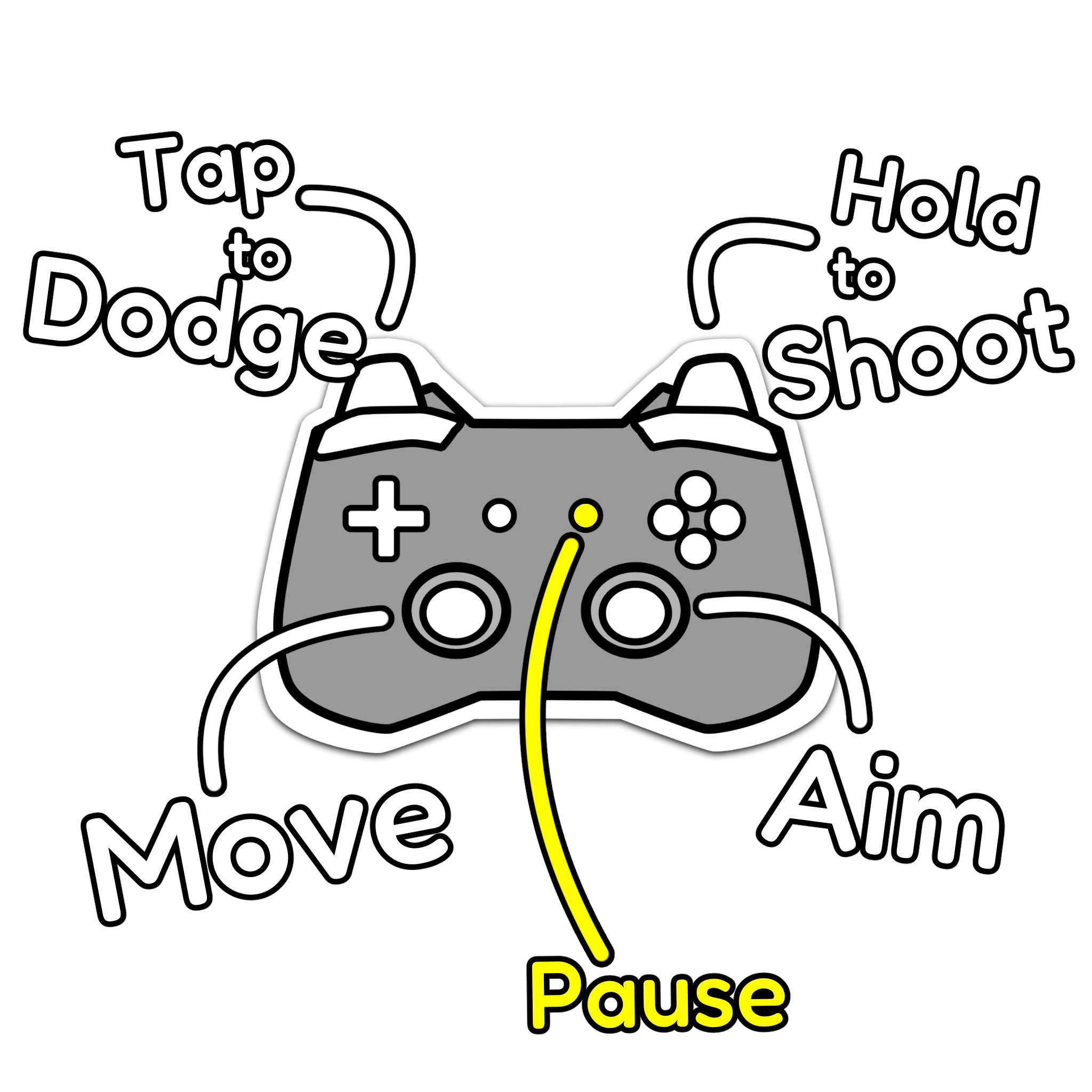
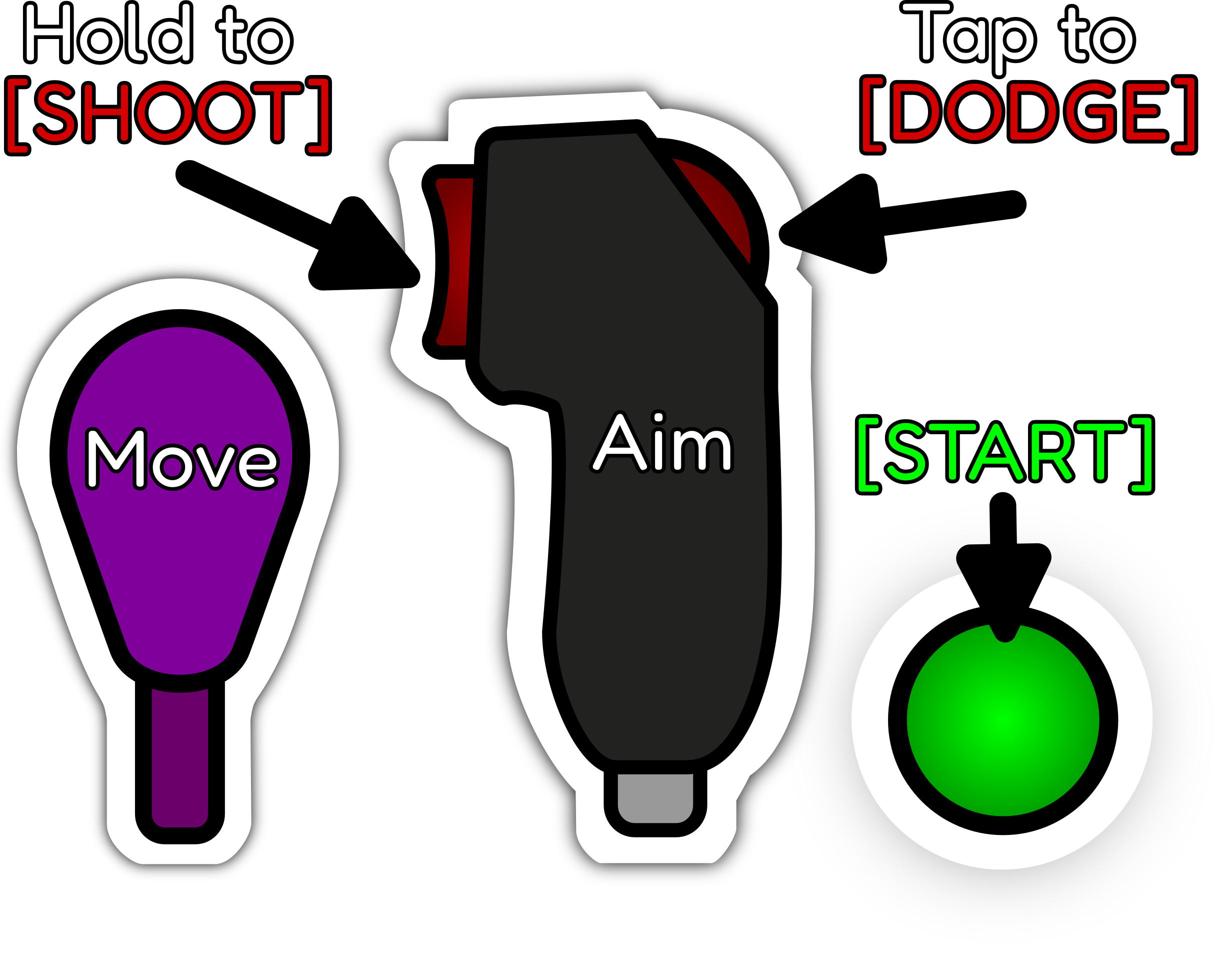
The player controls was created with three release versions in mind: a local only demo release, an online release (on the Steam and itch.io platforms), and an arcade version of the game. Therefore, we had to develop multiple different control schemes in mind, each with different amount of buttons available to the player.
Since the beginning of development, we had the goal of creating an arcade version of the game, which would likely have much less controls available to the player than other control schemes. With this in mind, we focused on creating the gameplay to require fewer controls during each section of gameplay. In the end, the game never requires more than three buttons, and two analog sticks to either play the core gameplay or navigate the menus and UI.
Player Dialogue
Our game also has many quips and barks said by the bosses or the player ants over the course of the game. The barks add a lot of personality to the game, and was absolutely needed to complete the experience of Poly-Vinyl Pests. However, there was always the worry that the barks would intrude on the gameplay, and we had to determine where and when was the best time to trigger the quips.
After several iterations and testing sessions, we found that the boss barks were not very intrusive during battle, especially since there were some moments of downtime during parts of the fight where the boss’ heath was not a concern. This also give us leeway to use the barks to convey important information in the fight, such as how to dodge or counter new attacks that players might encounter.
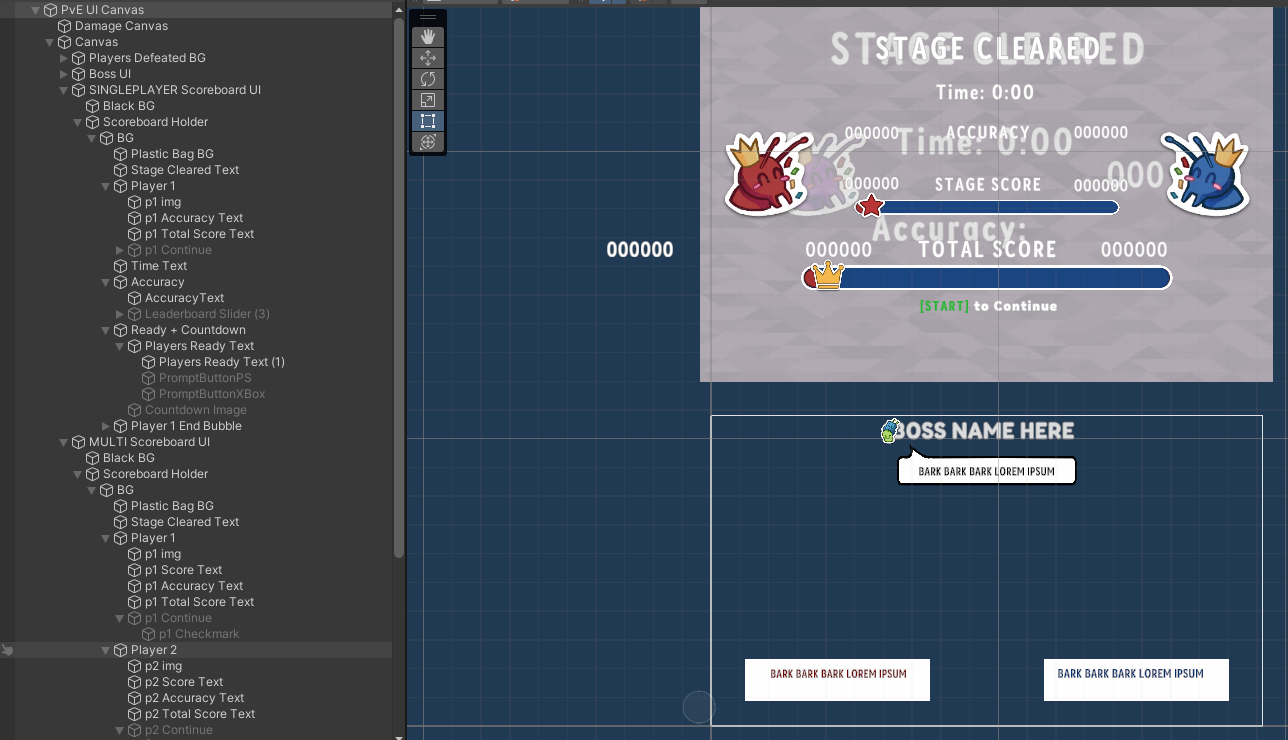
The layout of the In-Game UI in Unity editor.
The ant barks also added lots of personality to the fight, but we found that there was potential that they could obscure the player’s play space during critical moments. Therefore, we only activated them during specific times, such as before fights, after fights, and the results.
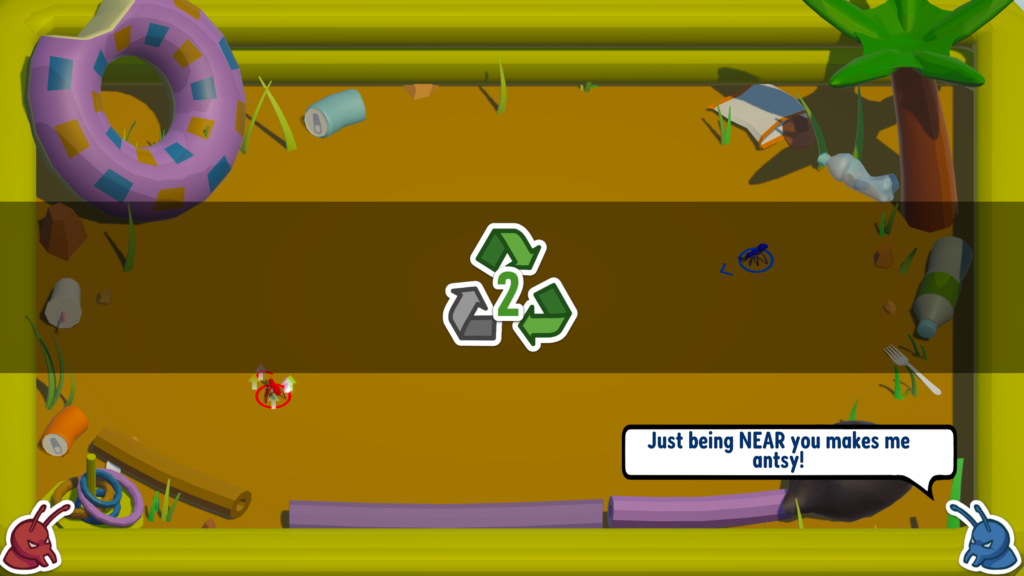
However, there was one spot where we found that mid fight barks needed to be used. The finale’s ruleset was often found to be confusing to new players, and would require several forms of communication to convey the rules of the gamemode. Part of the solution we utilized was to have barks trigger during key parts of the fight, but have those barks specifically be much more transparent than usual.
Screenshot of the finale. An example of player barks in game.
Upgrades and Abilities
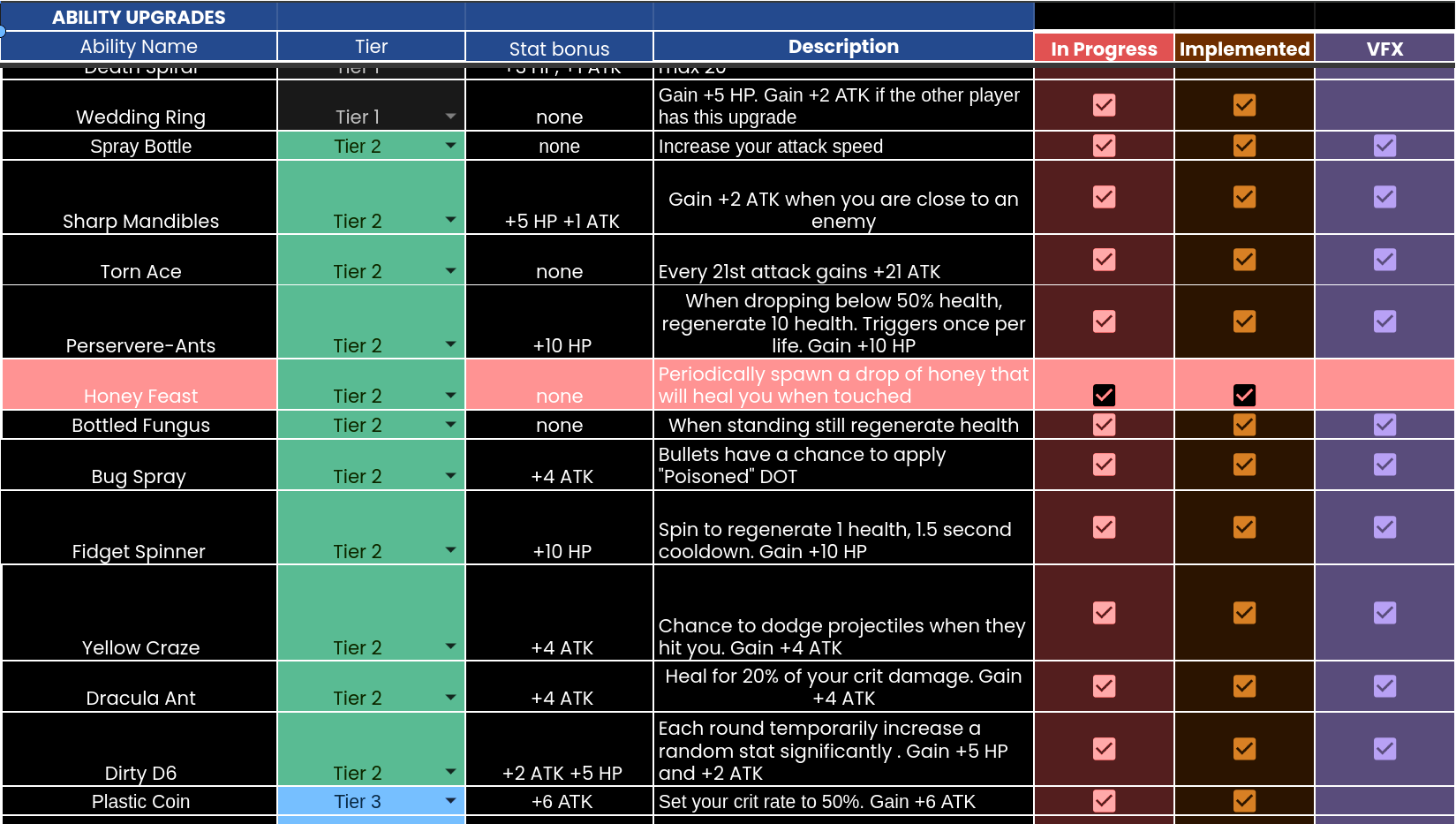
A screenshot from the larger Upgrade Spreadsheet.
Playtest Organization and Analysis
We were given the opportunity to playtest our game many times over the course of development and gain valuable lessons and feedback from a large group of players. We were also given feedback by other members of the game development community, and I was able to apply some previous lessons I had learned to create better feedback questions than before.
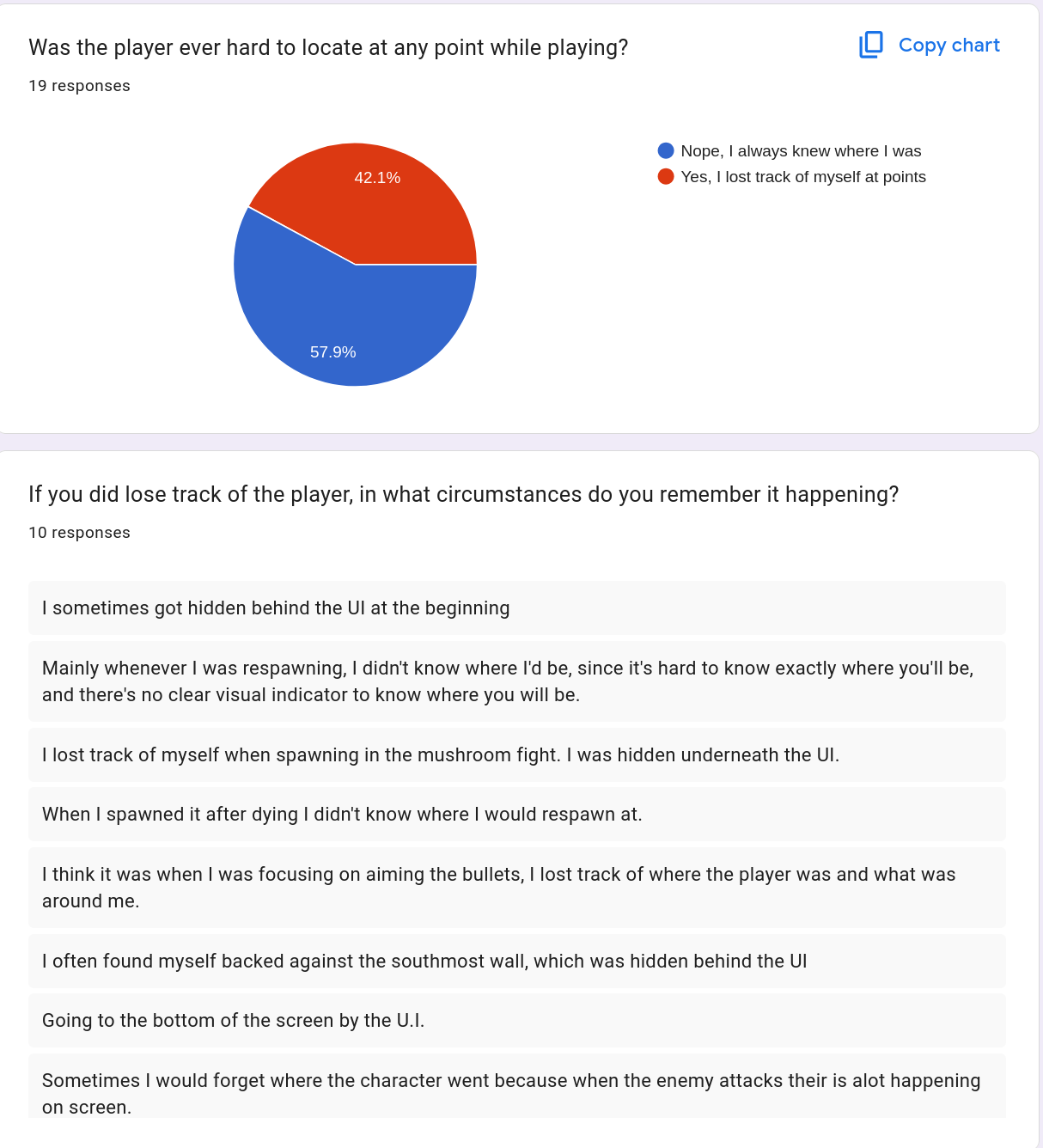
One of the big lessons from previous projects I did, and applied to this project, is to utilize an even ranking system. In the first case, it was a binary system. I learned that if given a odd or low number of options, rating feedback would tend to all clump up into the middle section, creating vague results. The rating system here was able to give us more accurate feedback., and showed us that we needed to make our player character easier to track somehow.
Here, for instance, in an earlier playtest of the game, we learned through this feedback that new players were struggling to find their player characters in certain areas of the screen. The primary struggle was twofold: differentiating the color of the ants, and finding their shape during the action.
With this problem identified, we took several iterations and more playtests to refine the UI and make the position of the characters clear. The first idea was to make the character models bigger, but we realized that it made the movement of the characters in the arenas feel more constrained than we had hoped. We then suggested finding a way to have markers on the ground around the player ants, but the programmers were conflicted on the potential work that might require. The solution we went with for that problem was to create a dynamic decal project around the player with a bright marker for where the player is, which proved to solve the primary issue of player visibility.
Closing Thoughts
Developing Poly Vinyl Pests was a very enjoyable and fulfilling experience. I was able to connect with a large team of enthusiastic, thoughtful, and respectful team of new developers with various skill sets, and work together to create a large, cohesive product. I was able to develop a variety of my own skills during this time, such as programming, UI development, visual documentation, and team communication. I am very proud to have been able to make the contributions I made over the course of the project.